
Vaginal Dryness and Menopause: What a 17-Year Study Reveals About Women’s Changing Bodies
11
Oct
Oct
Some changes happen quietly. Many women experience them without knowing how common they are — or feeling comfortable enough to talk about them. Vaginal dryness is one of those changes.
Sis, let’s talk about something that deserves more attention.
Vaginal dryness isn’t always easy to bring up. You might notice that your body feels different, that intimacy has become uncomfortable, or that you’re experiencing changes you weren’t expecting. And sometimes, instead of asking questions, you keep it to yourself.
But research reminds us that these experiences are not unusual, particularly as women move through the menopausal transition.
What did the study find?
A longitudinal study published in the journal Menopause in 2018 examined vaginal dryness symptoms among 2,435 women participating in the Study of Women’s Health Across the Nation (SWAN).
Researchers followed participants over approximately 17 years, using repeated assessments to understand how vaginal dryness changed as the women moved through midlife.
The study reported the following:
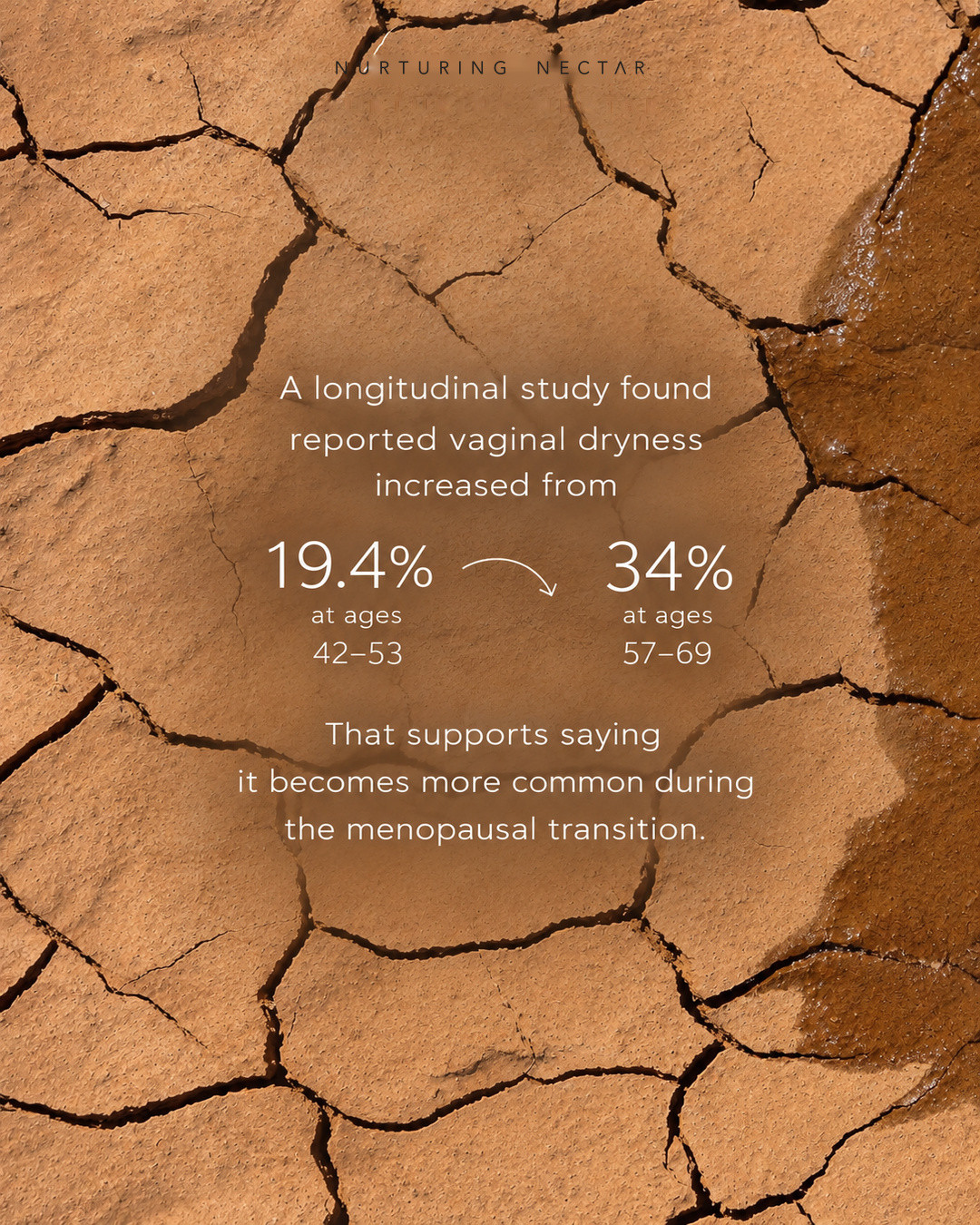
- 19.4% of women aged 42–53 reported vaginal dryness at the beginning of the study.
- 34% of women aged 57–69 reported vaginal dryness at the thirteenth assessment.
In other words, the proportion of women reporting vaginal dryness was higher at the later assessment than at the beginning. The researchers observed that symptoms became more prevalent as women progressed through the menopausal transition.
Sources & Further Reading
Waetjen LE, et al. (2018). Factors associated with developing vaginal dryness symptoms in women transitioning through menopause: a longitudinal study. Menopause, 25(10), 1094–1104.
Read the full research article (free)
What do these numbers mean for us?
First, vaginal dryness is worth discussing openly.
The figures do not mean that every woman will experience vaginal dryness as she gets older. They also do not mean that age is the only reason it happens.
However, the findings highlight an important pattern: vaginal dryness becomes more common across the menopausal transition.
For some women, this may mean noticing less natural lubrication. For others, it may involve irritation, soreness or discomfort during intimacy. Experiences differ from one woman to another.
And no, experiencing these changes does not make you less feminine, less desirable or any less deserving of a comfortable, fulfilling intimate life.
Why can vaginal dryness become more common around menopause?
Oestrogen plays an important role in maintaining the health, elasticity and moisture of vaginal tissues.
During perimenopause and menopause, changes in oestrogen levels can affect these tissues, contributing to dryness, irritation and discomfort during sex.
But menopause is not the only possible explanation. Vaginal dryness can also occur during breastfeeding or after childbirth, with certain medications, and for other reasons.
That is why persistent symptoms should not automatically be dismissed as ageing. Understanding the cause helps determine what kind of support may be appropriate.
The part we don’t always talk about
Sometimes, the physical change is only part of the experience.
You may wonder whether what you are feeling is normal. You may feel embarrassed to mention it to your partner or healthcare professional. You may even assume that discomfort is something you simply have to accept.
Sis, you don’t.
Intimate health is part of your health. You deserve information that helps you understand your body, ask questions without shame and make informed decisions about your wellbeing.
And if you are experiencing vaginal dryness, you are not doing anything wrong.
What can you do if you’re experiencing vaginal dryness?
There are options, and the right approach depends on the cause and your symptoms.
- Vaginal moisturisers may help with ongoing dryness.
- Lubricants can help reduce friction during sexual activity.
- Gentler intimate-care habits may help if fragranced or irritating products are contributing to discomfort.
- A conversation with a healthcare professional can help identify the cause and discuss appropriate treatment options, including whether local vaginal oestrogen may be suitable.
If symptoms persist, affect your daily life or make sex painful, seek professional advice. Unusual bleeding — particularly any vaginal bleeding after menopause — should be assessed by a healthcare professional.
You do not have to wait until discomfort becomes unbearable before asking for help.
Let’s make these conversations normal
At Nurturing Nectar, we believe women deserve spaces where intimate wellness can be discussed with honesty, care and understanding.
Research can help us recognise patterns, but conversations help us feel less alone in our experiences.
So, if your body feels different, give yourself permission to ask questions. Learn what you can, seek support when you need it, and remember that your experience deserves to be taken seriously.
No shame. No judgement. Just knowledge, understanding and sisterhood. 💜
This article is for educational purposes and is not a substitute for individual medical advice.
Keep learning with Nurturing Nectar
Related sisterhood edit: Vaginal Dryness: Causes, What Helps & When to Seek Advice for a broader look at possible causes, practical options and when to speak to a healthcare professional.
Have a question about women’s intimate wellness that you wish more people would talk about? We welcome suggestions for future topics in our Sisterhood Journal.
A Little Note from Sisterhood
Sis, your body will change throughout your life, and you deserve to understand those changes without feeling embarrassed or alone. Never feel that you have to suffer in silence or pretend everything is fine. Ask the questions, seek the support you need, and give yourself the same kindness you would offer another woman.
We’re learning, growing and finding our way together — one conversation at a time.
With love,
Your Nurturing Nectar Sisterhood 💜
