
Intimate Feminine Hygiene & Care: A Complete Guide to Keeping Your Vulva Healthy
12
Jun
Jun
Taking care of your intimate area doesn’t need to involve a complicated routine or a shelf full of specially scented products.
In fact, gentle is often better.
The vulva—the external part of your genital area—has delicate skin that can become irritated by fragrances, harsh soaps, wipes, deodorants and excessive washing. The vagina itself is self-cleaning, so there is no need to wash or douche inside it.
A healthy intimate-care routine is really about keeping the external area clean, dry and comfortable while understanding what’s normal for your body.
In this guide, we’ll cover feminine hygiene, vulva care, washing, period hygiene, underwear, intimate products, common concerns and when to seek medical advice.
What Is the Difference Between the Vulva and the Vagina?
These terms are often used interchangeably, but they refer to different parts of the body.
The vulva is the external genital area. It includes the labia, clitoris and vaginal opening.
The vagina is the internal muscular canal connecting the vaginal opening to the cervix.
This distinction matters because you should clean the vulva gently, but you don’t need to clean inside the vagina. The vagina naturally maintains its own environment. Douching or repeatedly washing inside it can disturb the natural balance and cause irritation.

How Should You Wash Your Intimate Area?
For most people, intimate hygiene can be very simple.
1. Clean the vulva gently
Use your hand to gently clean the external area. Avoid aggressive scrubbing, sponges and rough washcloths, which can irritate sensitive skin.
2. Don’t wash inside the vagina
There’s no need to insert water, soap, wipes or cleansing products into the vagina.
Avoid vaginal douching altogether. It can disrupt the natural vaginal environment and may contribute to irritation and infections.
3. Avoid over-washing
More washing doesn’t necessarily mean better hygiene.
Excessive washing can dry out and irritate vulval skin. Some NHS vulval-care guidance recommends washing the vulva gently once a day and avoiding irritating products.
4. Dry gently
After washing, gently pat the area dry with a soft, clean towel rather than rubbing.
Do You Need Feminine Wash?
Not necessarily.
Many products marketed specifically as “feminine washes” contain fragrance or other ingredients that can irritate sensitive vulval skin.
If you choose to use a cleanser, look for something gentle and fragrance-free, and use it only externally. Some clinical guidance recommends a suitable emollient or soap substitute for people with sensitive or irritated vulval skin.
You do not need to make your vagina smell like perfume.
A healthy vagina has a natural scent, and it can change throughout your menstrual cycle.
Feminine Hygiene Products: What Should You Avoid?
When choosing intimate-care products, pay attention to how your skin reacts.
You may want to avoid:
- Perfumed soaps
- Vaginal deodorants
- Scented wipes
- Bubble baths
- Strong shower gels
- Douches
- Antiseptic products
- Heavily fragranced laundry products
- Scrubs used on the vulva
Clinical vulval-care guidance specifically advises avoiding many of these potential irritants.
Your intimate area doesn’t need to smell like flowers to be clean.
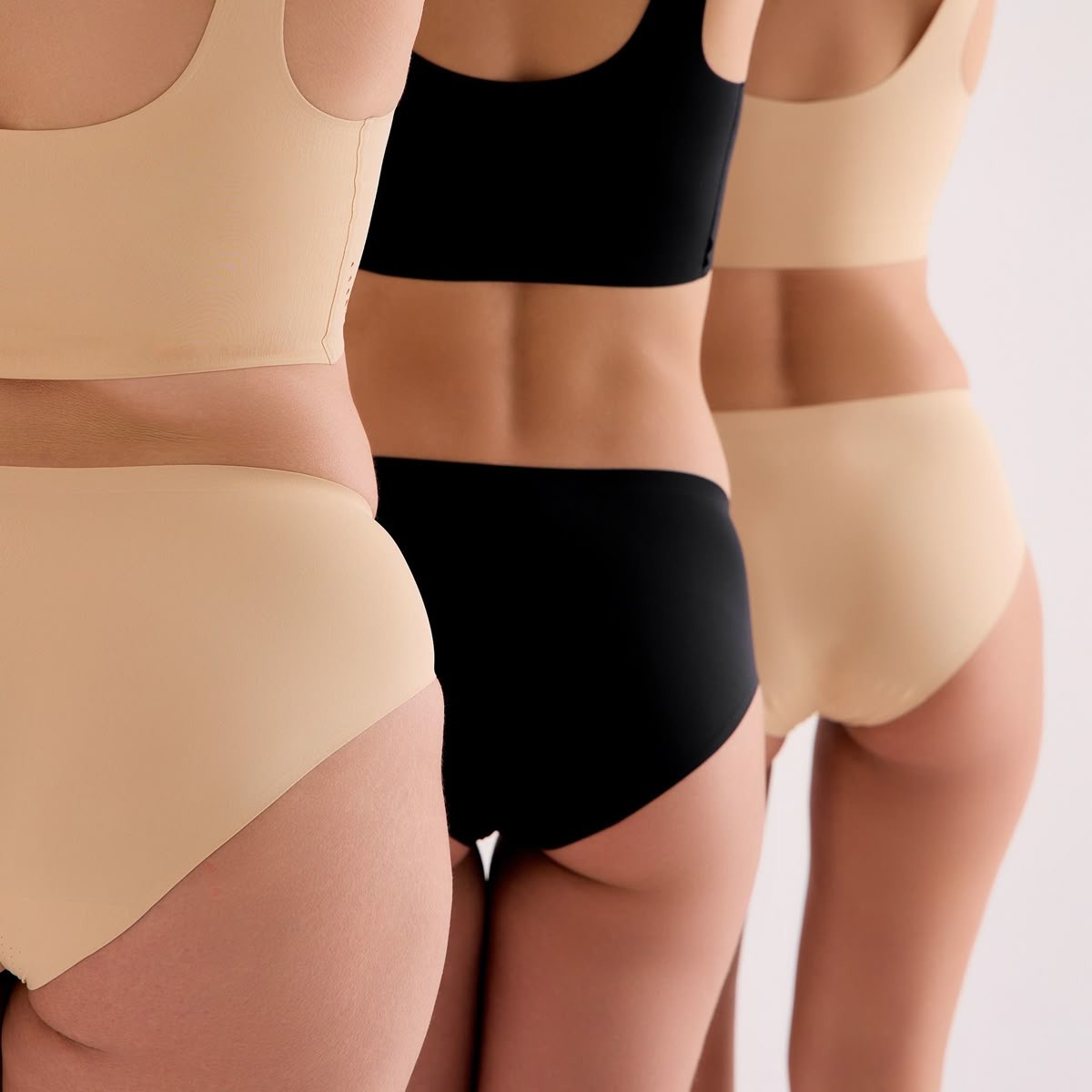
Choosing Underwear for Intimate Comfort
Underwear can affect comfort, particularly if you are prone to sweating, irritation or chafing.
Consider:
- Breathable fabrics such as cotton
- Comfortable, non-restrictive underwear
- Changing underwear after exercise or heavy sweating
- Avoiding clothing that causes persistent rubbing
- Washing underwear thoroughly and avoiding strongly fragranced laundry products if they irritate your skin
Loose-fitting clothing can also be more comfortable when the vulval area is irritated.
Feminine Hygiene During Your Period
Your period is a normal part of reproductive health, but menstrual products still need to be used thoughtfully.
Change your menstrual products regularly
Follow the manufacturer’s instructions for pads, tampons, menstrual cups or other products.
Pay attention to irritation
If a particular pad, liner or product causes itching, burning or soreness, consider switching to an unscented alternative.
Some vulval-care guidance recommends avoiding fragranced sanitary products because they can irritate sensitive skin.
Keep your hands clean
Wash your hands before and after changing menstrual products.
Are Panty Liners Good for Everyday Use?
Panty liners can be useful for some people, but wearing them every day isn’t necessary for everyone.
If you use them, consider unscented options and pay attention to whether they cause irritation or increased moisture.
If you regularly need a liner because of unusual discharge, persistent leakage or bleeding, it’s better to investigate the underlying cause rather than simply masking the symptom.
What Is Normal Vaginal Discharge?
Vaginal discharge is normal and helps keep the vagina healthy.
The amount, texture and appearance can change during your menstrual cycle.
However, a noticeable change in discharge—particularly if accompanied by itching, soreness, pelvic pain, unpleasant odour, pain when urinating or bleeding—can indicate a problem that needs medical assessment.
Don’t automatically assume unusual discharge means you need a stronger feminine wash. Cleaning more aggressively can actually make irritation worse.

Intimate Hygiene and Vaginal Odour
A mild natural vaginal scent is normal.
However, a new, strong or unusual odour, particularly when accompanied by a change in discharge, itching, burning or discomfort, should not simply be covered up with perfume or vaginal deodorant.
Changes in discharge and odour can sometimes occur with conditions such as bacterial vaginosis or other infections, so medical advice may be appropriate.
What About Vaginal Dryness?
Vaginal dryness can happen for several reasons, including hormonal changes associated with menopause, pregnancy, breastfeeding and certain medications.
It can cause:
- Dryness
- Itching
- Soreness
- Discomfort during sex
- Increased urinary symptoms
If you’re experiencing persistent vaginal dryness, speak with a healthcare professional. Depending on the cause, treatments such as vaginal moisturizers, lubricants or hormonal treatments may be appropriate.
Intimate Care After Sex
Good intimate care after sex can be simple.
- Urinate if you need to.
- Gently clean the external area.
- Avoid douching.
- Avoid fragranced products.
- Use lubricant if dryness or friction is an issue.
- If you have concerns about STIs, seek appropriate sexual-health testing.
Lubrication can also help reduce friction and discomfort during sex.
What About Shaving or Removing Pubic Hair?
Pubic hair removal is a personal choice. You don’t need to remove pubic hair to be hygienic.
If you choose to shave, trim or wax, be mindful that hair removal can cause irritation, small cuts, ingrown hairs and inflammation.
Avoid applying strongly fragranced products to freshly shaved skin.
When Should You See a Healthcare Professional?
Don’t try to treat persistent intimate symptoms simply by changing your hygiene routine.
Speak to a doctor, gynaecologist or sexual-health professional if you experience:
- Persistent itching or burning
- Significant soreness
- Unusual vaginal discharge
- A new or strong unpleasant odour
- Pain when urinating
- Pelvic pain
- Pain during sex
- Bleeding between periods
- Bleeding after sex
- Vaginal bleeding after menopause
- Symptoms that keep returning
Persistent symptoms can have several causes and may require specific treatment.
A Simple Daily Feminine Hygiene Routine
You really don’t need a complicated routine.
Morning or shower time
Clean → rinse → gently dry → clean underwear
That’s it.
Avoid the temptation to keep adding products simply because they’re marketed as feminine-care essentials.
Healthy intimate care is about protecting the natural environment, not trying to sterilize it.
Frequently Asked Questions

How often should I wash my intimate area?
Generally, gently washing the external vulval area once a day is sufficient for many people. If you’re experiencing irritation or a specific skin condition, follow advice from your healthcare professional.
Should I wash inside my vagina?
No. The vagina is self-cleaning. Avoid douching or inserting cleansing products into the vagina.
Is feminine wash necessary?
No. A feminine wash isn’t essential for everyone. If you use one, choose a gentle, fragrance-free product and use it externally.
Is vaginal odour normal?
Yes. A natural vaginal scent is normal. However, a new or unusually strong odour—especially with changes in discharge or discomfort—should be assessed.
Can I use wipes on my intimate area?
It’s generally better to avoid fragranced feminine wipes because they can irritate sensitive vulval skin.
Should I wear cotton underwear?
Cotton and other breathable fabrics can be comfortable, particularly if you experience irritation or sweating. Loose-fitting clothing may also help reduce friction.
Can poor hygiene cause vaginal infections?
Some infections aren’t caused by being “unclean.” Using harsh products or douching can actually disturb the natural vaginal environment and contribute to irritation or infection risk.
