
Those Bumps Down There: What Your Bikini Area Might Be Trying to Tell You
19
Sep
Sep
Not every intimate bump is an ingrown hair. Here’s what can cause them, what you can do and when it’s time to get checked.
There’s a moment many women know all too well.
You’re showering, getting dressed or simply checking your skin — and you notice a few little bumps around your bikini area.
Maybe they’re red. Maybe they itch. Maybe one feels sore. Maybe they appeared after shaving. Or perhaps you haven’t shaved at all and you’re wondering:
“What is going on down there?”
First, sis, don’t panic.
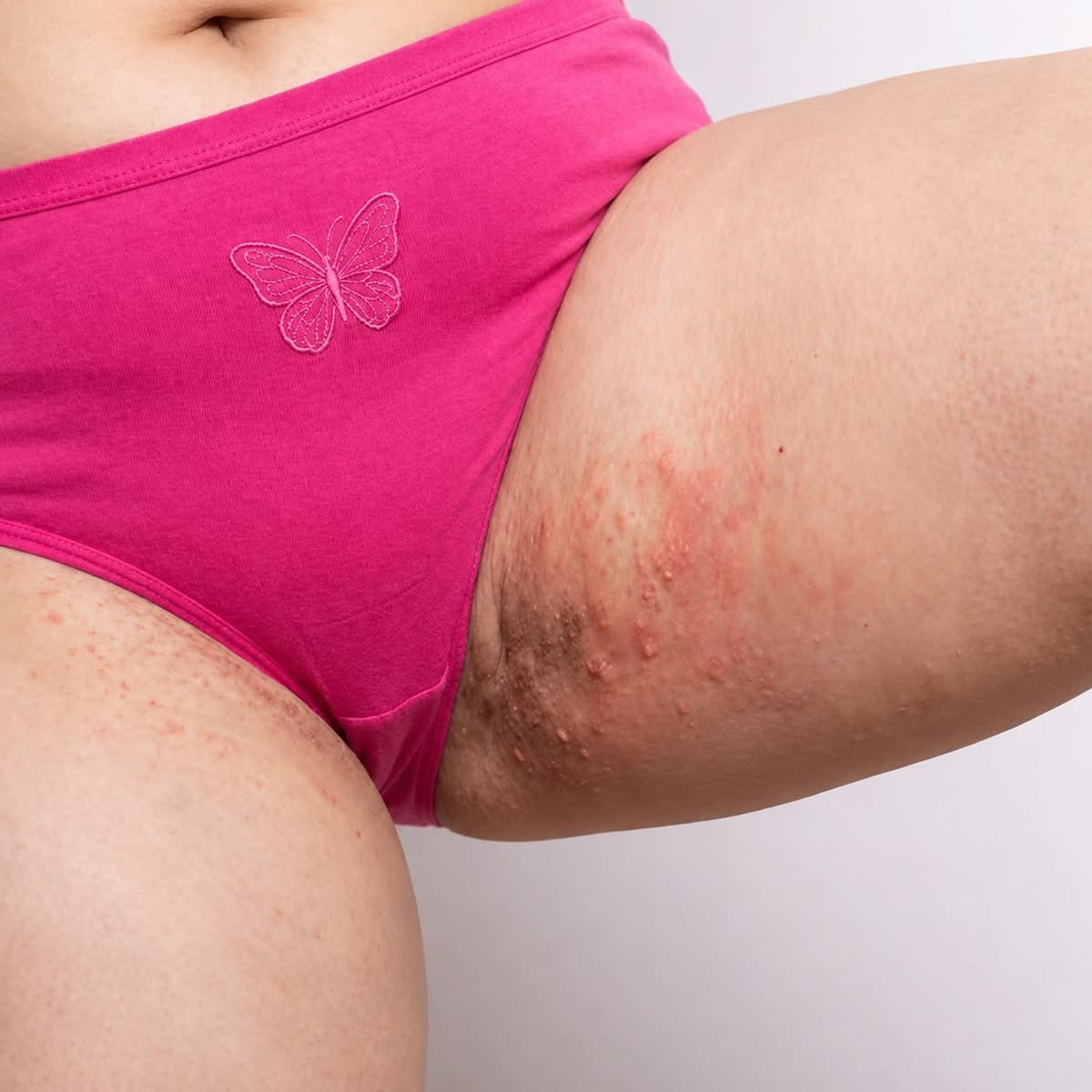
Bumps around the bikini area can happen for several different reasons. Some are related to hair removal, while others can be caused by friction, sweat, irritation or inflammation of the hair follicles. And sometimes, a bump that looks like an ordinary ingrown hair may actually need a healthcare professional to take a closer look.
So let’s talk about it — without embarrassment, judgement or unnecessary panic.
Your Bikini Area Is Skin Too
We often think about our intimate area as completely separate from the rest of our skin, but the vulva and surrounding bikini area are covered in skin that can experience irritation, inflammation and sensitivity just like other parts of the body.
The vulva can be affected by conditions such as folliculitis and contact dermatitis, while friction, shaving and waxing can also contribute to irritation.
That means a bump doesn’t automatically mean something is wrong with your vaginal health.
Sometimes, it’s simply your skin asking for a little more care.
So, What Could Those Bumps Be?
There isn’t one single explanation for every bikini-area bump.
Here are some of the more common possibilities.
1. Ingrown Hairs
An ingrown hair happens when a hair grows back into the skin rather than growing normally outward.
They can appear as raised, itchy bumps and are particularly common in areas where hair is removed, including the pubic area. People with coarse or curly hair may be more prone to them.
You may sometimes be able to see a trapped hair underneath the skin.
An ingrown hair can also become inflamed or infected, which may make the bump painful or cause pus to appear.
And yes — shaving isn’t the only possible cause. Waxing, plucking and other hair-removal methods can also contribute to ingrown hairs.
2. Folliculitis
Sometimes the bump isn’t an ingrown hair at all.
Folliculitis is inflammation of a hair follicle and can appear as small red, sometimes painful bumps.
It can occur around the vulva and may be associated with shaving, waxing or friction.
This is one reason why it’s not always helpful to look at every bump and immediately assume:
“I must have shaved incorrectly.”
Your skin may be reacting to something else.
3. Friction, Sweat & Tight Clothing
Your bikini area experiences quite a lot of friction.
Think about underwear, tight jeans, leggings, exercise, sitting for long periods and sweating during the day.
For some women, repeated friction and moisture can contribute to irritation and uncomfortable skin.
If you regularly notice irritation after exercising or wearing tight clothing, it may be worth paying attention to what your skin is telling you.
Choosing breathable underwear and avoiding overly tight clothing when your skin is irritated can help reduce friction.
4. Your Products Could Be Irritating Your Skin
Sometimes the culprit isn’t your razor.
It could be what you’re putting on your skin afterwards.
Perfumed soaps, fragrances, deodorants, wipes and other scented products can irritate sensitive vulval skin. Contact dermatitis can cause symptoms such as itching, burning, rawness and stinging.
This is why more products don’t necessarily mean better intimate care.
Your intimate area doesn’t need to smell like perfume to be clean.
Gentle care is often kinder to sensitive skin.
Should You Stop Shaving?
Not necessarily.
If you enjoy removing your pubic hair, that’s completely your choice.
But here’s something worth remembering:
You don’t medically need to remove your pubic hair.
There is no medical or hygiene requirement for women to shave or wax their pubic hair. Hair-removal methods can also cause irritation or injury in some women.
Some women shave.
Some trim.
Some wax.
Some remove everything.
And some women leave their pubic hair completely natural.
There is no “correct” way for your body to look.
If you do choose to shave, your existing Nurturing Nectar guide on intimate grooming can walk you through safer shaving and grooming practices.
That way, we’re not repeating the same information here — we’re simply connecting the two conversations.
What Should You Do If You Already Have Bumps?
The first rule?
Don’t pick, squeeze or scratch them.
We know. It’s tempting.
Especially when you can feel a little bump and think, “Let me just get rid of this.”
But picking or squeezing an ingrown hair can damage the skin and increase the risk of infection.
Instead:
Give the skin a break.
Avoid shaving directly over irritated areas.
Wear comfortable, breathable underwear.
Avoid products that sting or contain strong fragrance.
Keep the area gently clean and dry.
And pay attention to whether the bumps are improving or getting worse.
For some types of folliculitis, warm compresses and loose clothing may help while the area heals.
When Is a Bikini Bump Worth Getting Checked?
This is the part I really want every sister to remember.
You don’t have to diagnose yourself.
If you notice a new bump and you’re unsure what it is, it’s okay to have it checked.
You should particularly seek medical advice if a bump:
- becomes very painful
- feels hot or increasingly swollen
- produces pus
- keeps coming back
- gets larger
- doesn’t go away
- is accompanied by significant itching, burning or pain
- is associated with other unusual changes to the vulval skin
A healthcare professional can examine the area and work out whether you’re dealing with an ingrown hair, folliculitis, contact dermatitis, a cyst or another skin condition.
ACOG also recommends speaking with a healthcare professional when you notice new bumps, painful swelling, itching or burning that doesn’t go away.
And Sis, Please Don’t Be Embarrassed
This deserves saying.
Your vulva is allowed to have texture.
Your bikini area doesn’t have to look perfectly smooth.
It doesn’t have to look hairless.
It doesn’t have to look like edited photographs online.
Skin has pores. Hair grows. Hormones change. Bodies sweat. Clothing rubs against us. Sometimes we get bumps.
That’s human.
The goal isn’t to have a completely flawless bikini area.
The goal is to understand your body, care for your skin and know when something needs attention.
A Little Sisterhood Reminder
If you’ve been quietly wondering why you have bumps around your bikini area, you’re definitely not the only woman asking that question.
And before you blame yourself — “Maybe I shaved wrong,” “Maybe I’m not clean enough,” “Maybe something is wrong with me” — pause.
There are many possible reasons for bumps around the bikini area, and not all of them are related to hygiene or grooming.
Be gentle with yourself.
Your intimate skin deserves care, not shame.
And if something doesn’t look or feel right, getting it checked isn’t being dramatic.
It’s knowing your body.
Sister to sister.
Look after her. Listen to her. And don’t be afraid to ask for help when she needs it. ❤️
Frequently Asked Questions
Are bikini bumps always ingrown hairs?
No. Bikini-area bumps can have several causes, including ingrown hairs, folliculitis, irritation and other skin conditions.
Can shaving cause bumps around the bikini area?
Yes. Shaving can contribute to ingrown hairs and folliculitis, particularly when the skin or hair follicles become irritated.
Should I squeeze a bikini bump?
It’s best not to pick or squeeze suspected ingrown hairs because this can damage the skin and increase the risk of infection.
Can tight underwear cause irritation?
Tight clothing and underwear can contribute to friction and irritation. Choosing breathable underwear and avoiding tight-fitting clothing when the area is irritated may help.
When should I see a doctor about a bikini bump?
Seek medical advice if the area becomes very painful, hot, swollen, produces pus, keeps returning, doesn’t improve, or if you notice persistent itching, burning, pain or other changes to the vulval skin.
